 Mukesh@gmail.com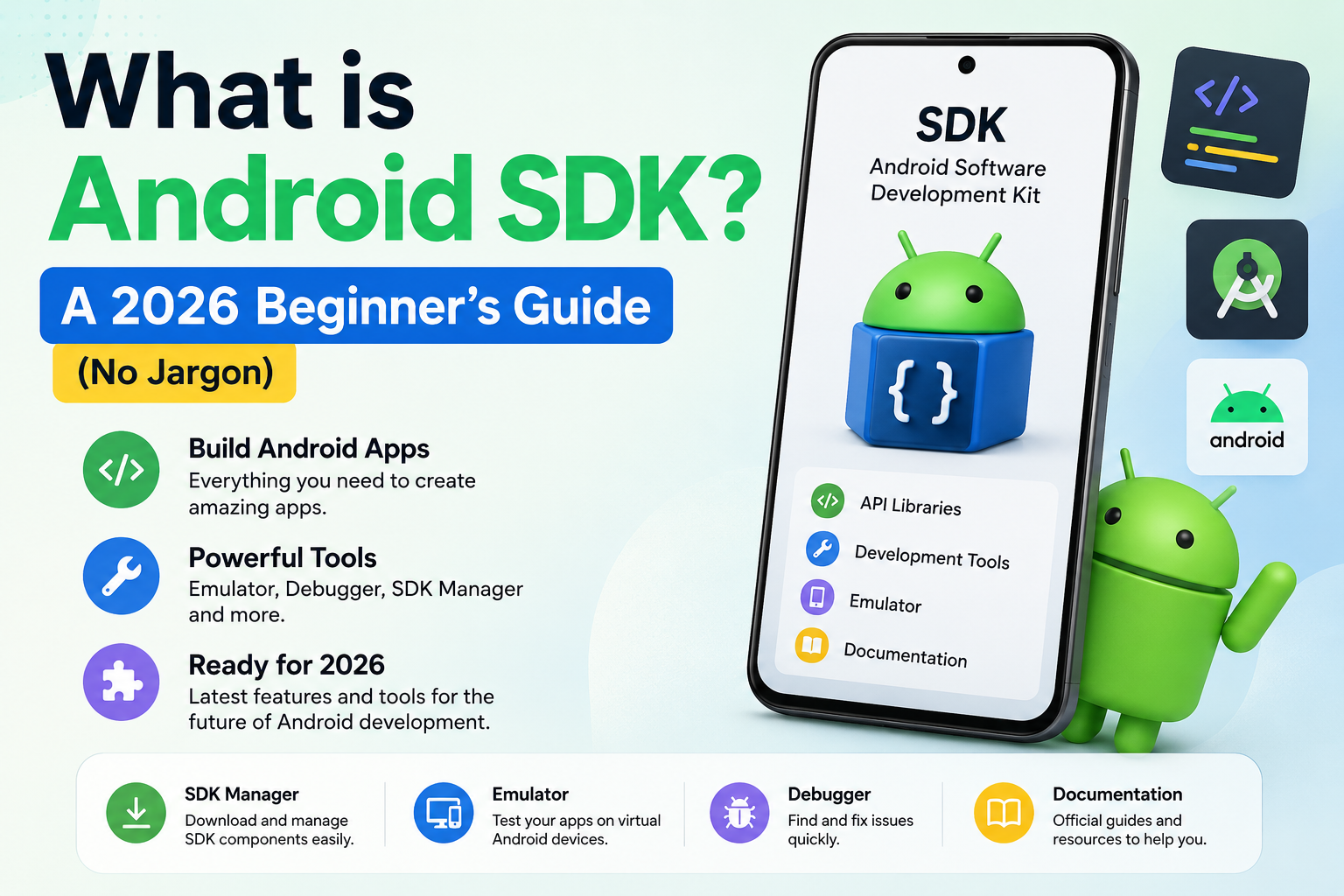
what is android sdk
If you’ve just started exploring Android development, you’ve probably come across the term “Android SDK” almost immediately. It shows up in tutorials, in Android Studio setup guides, in documentation — practically everywhere. And if nobody has explained what it actually means in plain language, it can feel like everyone else knows something you don’t.
The truth is, the Android SDK is one of those terms that sounds more complicated than it actually is. Once someone explains it properly — without drowning you in technical jargon — it makes complete sense. And understanding what it is, what it does, and why it matters will help everything else about Android development fall into place much faster.
This guide explains the Android SDK from scratch. No assumed knowledge, no unnecessary complexity, just a clear and honest explanation of what you’re actually working with when you build Android apps in 2026.
Start With the Word “SDK” – What Does It Actually Mean
SDK stands for Software Development Kit. Those three words together tell you exactly what it is — a kit, a collection of tools, that you use to develop software.
Think about it like a physical toolkit. If you want to build furniture, you need a specific set of tools — a saw, a hammer, measuring tape, screws. You could technically try to build furniture without these tools, but it would be nearly impossible and the result would be terrible. The toolkit exists so that people building furniture have everything they need in one place.
A software development kit works the same way. It’s a collection of tools, files, libraries, and resources that a developer needs to build a specific type of software. When you add “Android” in front of SDK, it means: a kit of tools specifically designed for building Android apps.
Without the Android SDK, you’d have no way to create apps that run on Android phones. It’s the foundational layer that connects your code to everything the Android operating system can do.
What’s Actually Inside the Android SDK
The Android SDK isn’t a single file or a single program. It’s a collection of many different components that each serve a specific purpose. Understanding what’s inside helps you understand why it matters.
Android API Libraries
The most important part of the SDK is the collection of API libraries — pre-written code that gives your app access to everything an Android phone can do.
Want your app to take a photo? There’s an API for that. Want to access the user’s location? There’s an API. Want to play audio, send a notification, read from storage, connect to the internet, use the fingerprint sensor? Every single one of these capabilities has a corresponding API in the Android SDK.
Without these libraries, you’d have to write all of that code yourself from scratch — figuring out at a hardware level how to communicate with the camera sensor, how to read GPS coordinates, how to manage audio buffers. That would take years for a single developer and would be different on every Android device.
The SDK’s API libraries handle all of that complexity for you. You call a few lines of code using the API, and the SDK takes care of communicating with the hardware underneath.
Build Tools
The Android SDK includes build tools — programs that take the Kotlin or Java code you write and convert it into a format that Android devices can actually run.
Your code is written in a human-readable programming language. Android phones don’t run human-readable code directly — they run compiled, optimized machine instructions. The build tools handle this conversion process, packaging everything your app needs into an APK or AAB file that can be installed on a device or uploaded to the Google Play Store.
Android Emulator
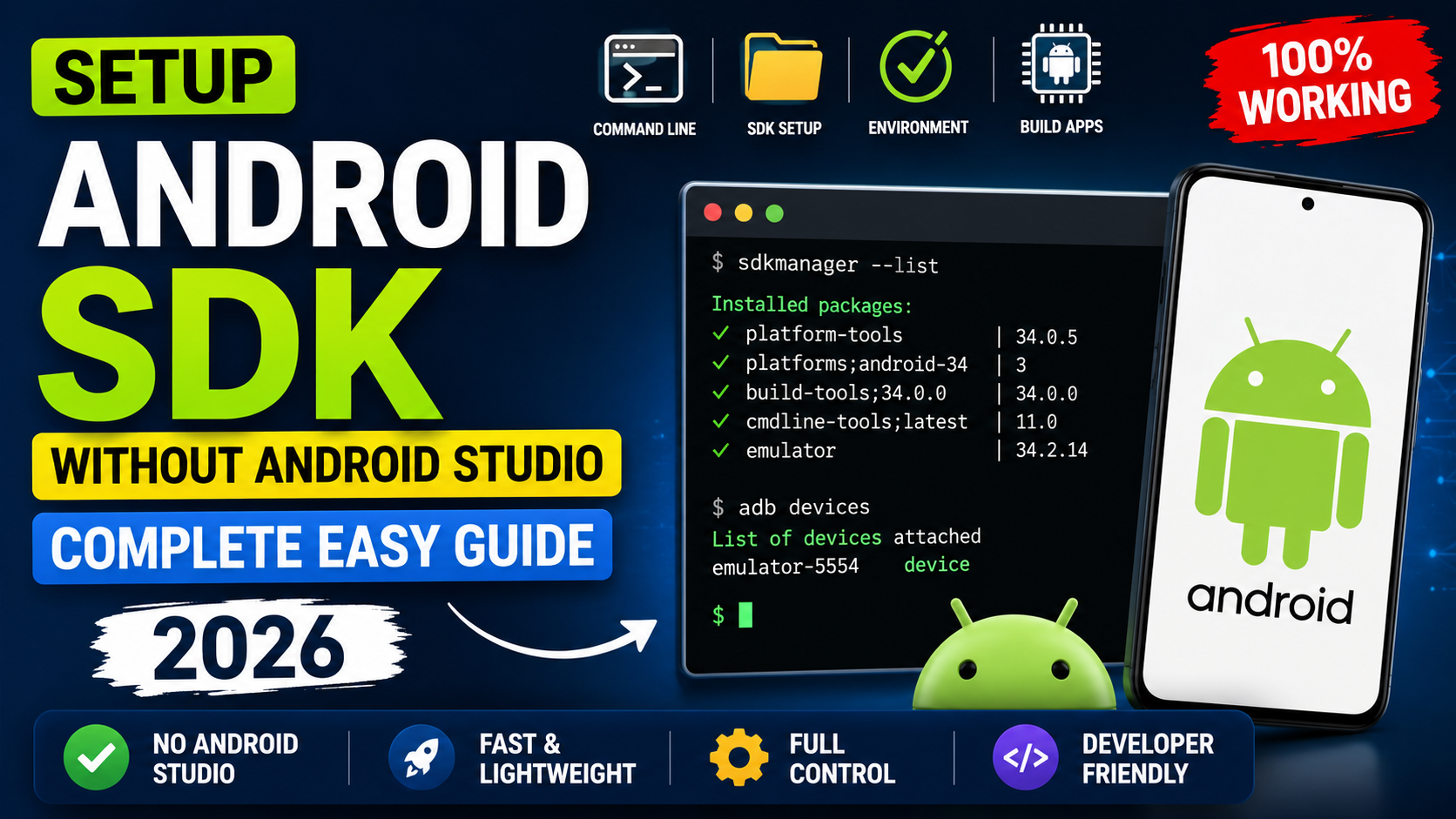
The SDK includes tools for running an Android emulator on your computer — a virtual Android phone that you can use to test your apps without needing a physical device.
This is incredibly useful during development. Instead of deploying your app to a real phone every time you want to test a small change, you can run it on the emulator and see results immediately. The emulator can simulate different screen sizes, different Android versions, different network conditions, and even different hardware configurations.
Platform Tools
Platform tools are command-line utilities that let you communicate directly with Android devices connected to your computer. The most important of these is ADB — Android Debug Bridge.
ADB lets you install apps on a connected device, view log output from a running app, transfer files, and run shell commands on the device. When something goes wrong in your app and you need to understand what happened, ADB log output — called Logcat — is one of your most important debugging tools.
SDK Platforms
Each version of Android — Android 12, Android 13, Android 14, Android 15 — has its own SDK platform that you can download. Each platform contains the API libraries specific to that Android version, including any new features or changes introduced in that release.
When you build an Android app, you specify which SDK platform versions you’re targeting. This tells the build tools which APIs are available to your app and how to handle compatibility with older devices.
How the Android SDK Connects to Android Studio
If you’ve set up Android development before, you’ve probably installed Android Studio — Google’s official IDE for Android development. New developers sometimes confuse Android Studio with the Android SDK, or assume they’re the same thing. They’re not.
Android Studio is the editor — the application you use to write code, design layouts, and manage your project. It’s the environment you work in every day.
The Android SDK is the toolkit that Android Studio uses behind the scenes. When you build your app in Android Studio, it calls the SDK’s build tools. When you run the emulator, it uses the SDK’s emulator tools. When you write code that accesses the camera or GPS, you’re using the SDK’s API libraries.
Android Studio comes with the SDK Manager built in — a tool that lets you download and manage different SDK versions, update build tools, and install additional SDK components. When Android Studio prompts you to “download SDK components” during setup, it’s downloading the parts of the Android SDK that you need for development.
The relationship is practical: Android Studio is where you work, the Android SDK is what makes your work possible.
API Level – The Number You’ll See Everywhere
When you work with the Android SDK, you’ll constantly encounter the term API level. This is a number that corresponds to a specific Android version and determines which features are available to your app.
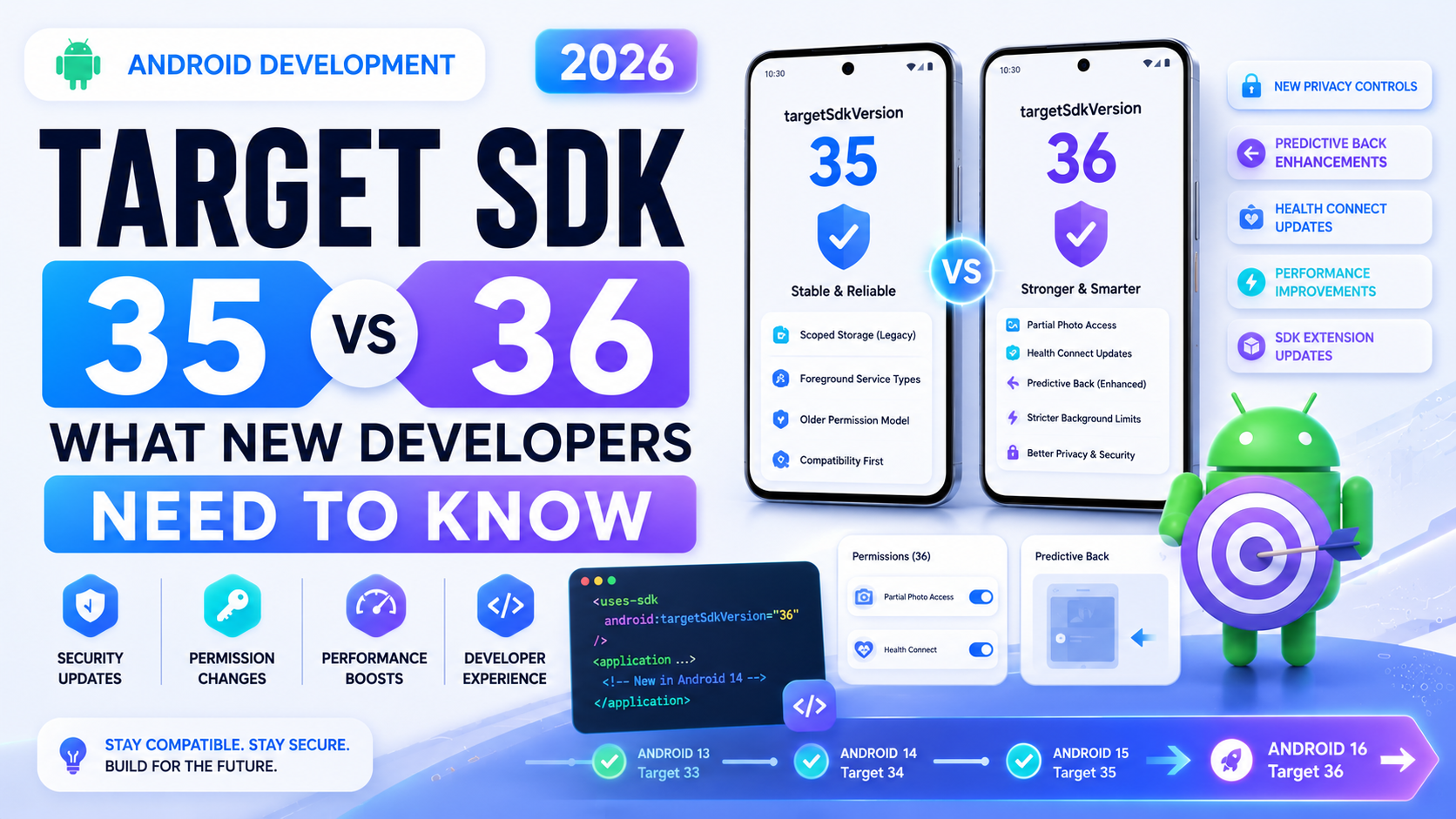
Android 14 corresponds to API level 34. Android 15 is API level 35. Each time Google releases a new version of Android with new features, the API level increases by one.
When you create a new Android project, you set two important API levels:
Minimum SDK — the oldest Android version your app will support. If you set this to API level 26 (Android 8.0), your app will run on any device with Android 8.0 or newer. Setting a lower minimum SDK means more devices can use your app, but you can only use features available in that older version.
Target SDK — the Android version you’ve specifically designed and tested your app for. This is usually the most recent stable Android version. Google Play Store requires apps to target a recent API level, and they update this requirement periodically to encourage developers to keep their apps current.
Understanding API levels helps you make sense of why some code examples mention checking the Android version before using certain features — those features only exist above a certain API level, so the app needs to handle cases where it’s running on an older device that doesn’t have them.
The Android SDK in Relation to Kotlin and Java
Since you’re reading this in the context of Android development in 2026, it’s worth being clear about how the SDK relates to the language you write your app in.
The Android SDK is language-independent at its core. The underlying platform doesn’t care whether you wrote your app in Kotlin or Java — it receives the compiled output either way. The SDK’s API libraries are available to both languages.
However, Google provides Kotlin-specific extensions for many SDK APIs that make them much more pleasant to use in Kotlin than in Java. These extensions — part of the Android KTX library — use Kotlin features like extension functions, coroutines, and lambdas to provide cleaner, more concise versions of SDK APIs.
For example, accessing SharedPreferences (a simple data storage system) in Java requires several lines of boilerplate code. The KTX extension makes the same operation a single, readable line in Kotlin. The underlying SDK API is the same — KTX just provides a Kotlin-friendly interface to it.
This is one of the practical reasons why Kotlin has become the preferred language for Android development, as explored in detail throughout this series starting with Java vs Kotlin 2026: Should Beginners Still Learn Java First?.
What the Android SDK Does NOT Include
Understanding what the SDK doesn’t include is just as useful as knowing what it does include.
The Android SDK does not include Jetpack libraries. Jetpack — which includes Jetpack Compose, ViewModel, Room, Navigation, and many other components — is a separate set of libraries maintained by Google that you add to your project as dependencies. Jetpack libraries build on top of the SDK but are not part of it.
The SDK does not include third-party libraries like Retrofit for networking or Glide for image loading. Those are community-built tools you add separately.
The SDK does not include Firebase, Google Maps SDK, Google Play Services, or other Google services. Those are additional SDKs that you integrate alongside the core Android SDK.
The core Android SDK is specifically the platform foundation — the APIs that are part of the Android operating system itself, available on every Android device without requiring additional downloads.
SDK Versions and Keeping Things Updated
One practical aspect of working with the Android SDK that beginners often find confusing is version management.
The Android SDK is not a static, unchanging thing. Google updates it with every new Android release, adds new APIs, deprecates old ones, and releases updated build tools. Managing these versions is a routine part of Android development.
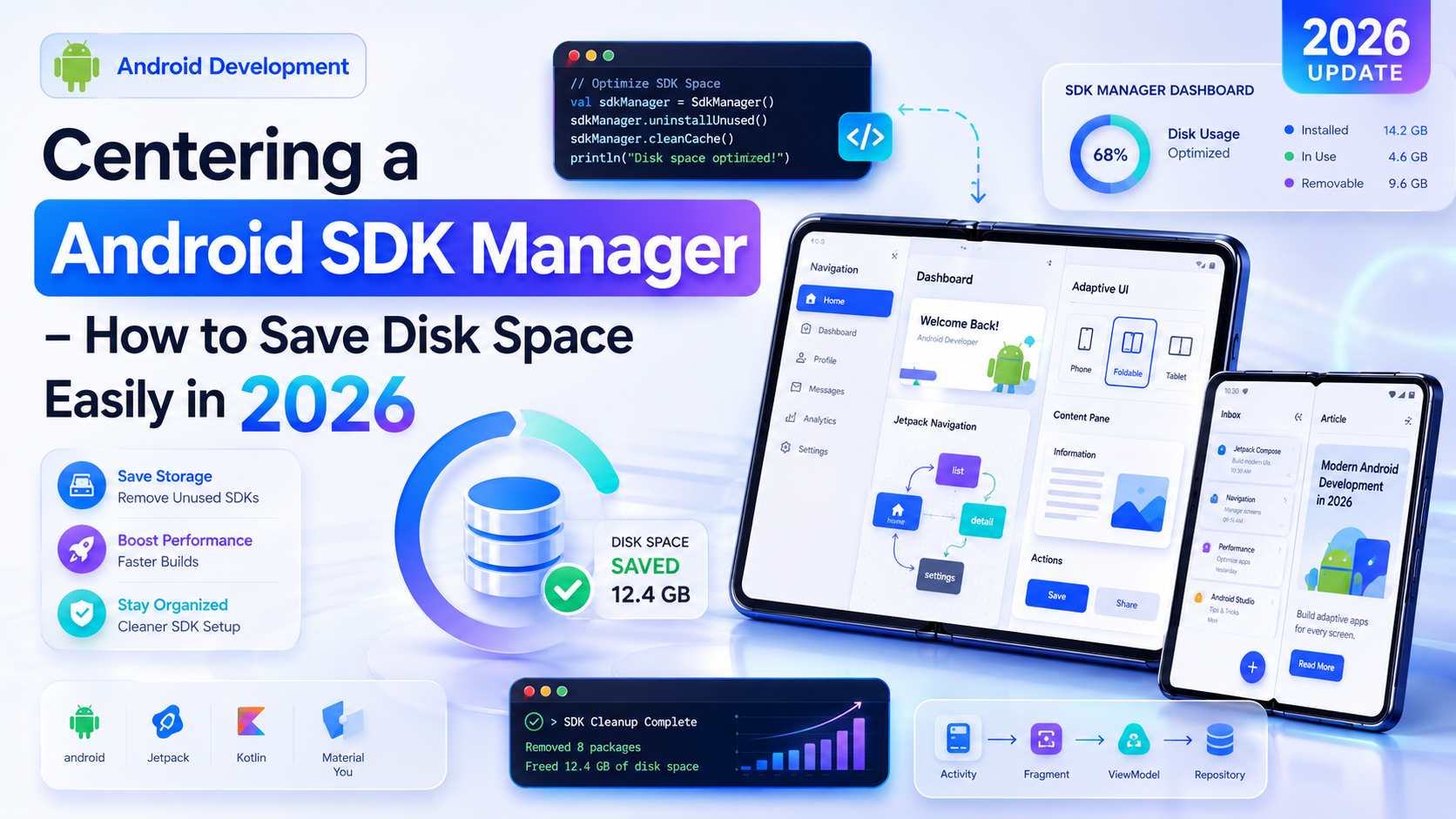
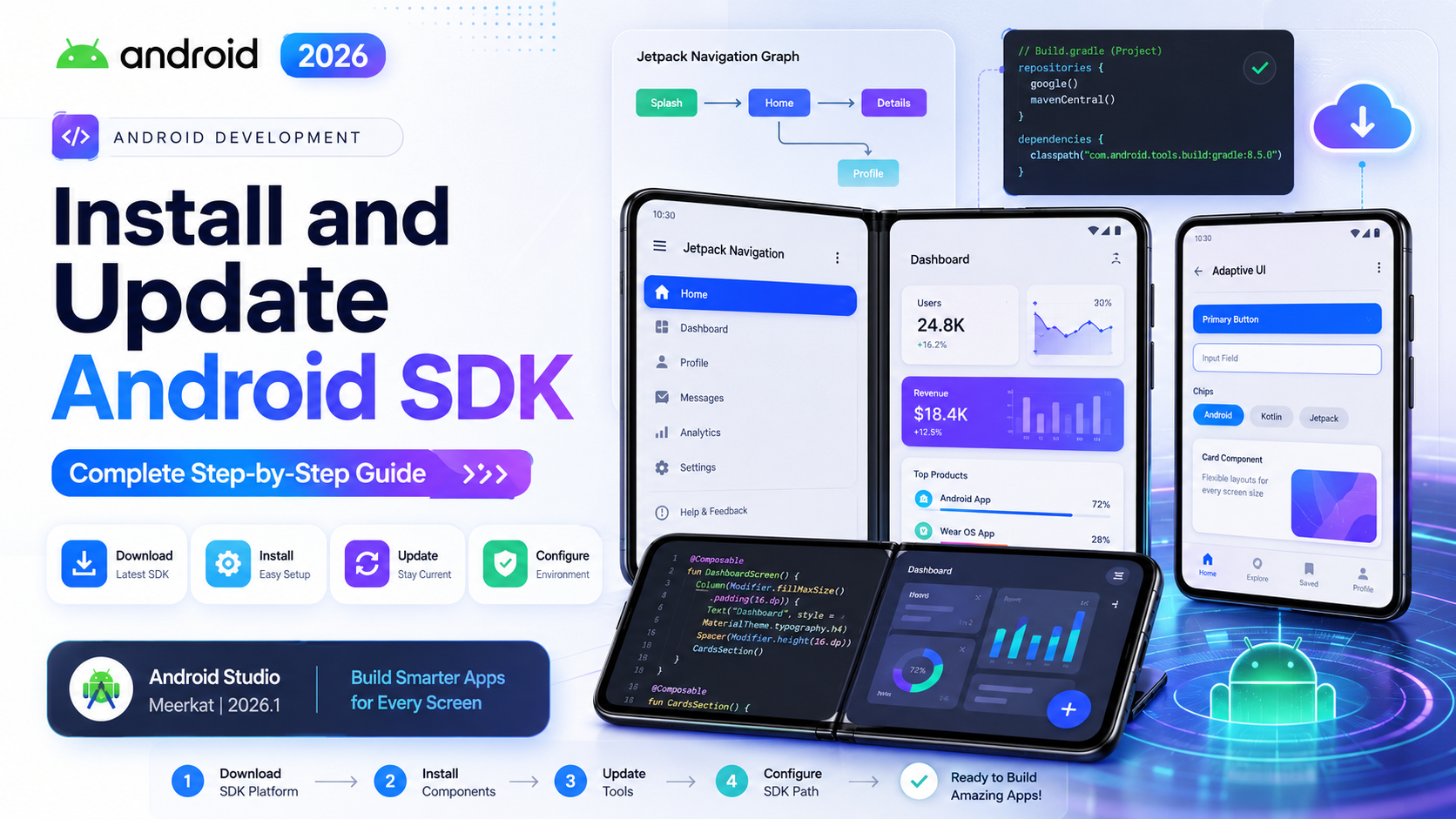
Android Studio’s SDK Manager is where you handle this. You can see which SDK platforms you have installed, download new ones, update build tools, and remove versions you no longer need. It’s worth checking the SDK Manager periodically — especially when a new Android version is released — to download the latest platform and ensure your build tools are current.
Keeping your SDK components reasonably up to date matters for a few practical reasons. New Android features require the corresponding SDK platform to be available. Updated build tools often include performance improvements and bug fixes. And Google Play Store requirements for target API levels mean you’ll need newer SDK platforms to meet submission requirements over time.
A Simple Mental Model to Remember
If all the detail above feels like a lot to hold in your head at once, here’s a simple mental model that captures the essential idea.
Think of the Android operating system as a city. The city has roads, buildings, utilities, and services — everything a resident needs to live and work there. But if you want to build something new in the city, you need to know the city’s rules, use its infrastructure, and connect your building to its systems.
The Android SDK is the city planning guide and construction toolkit for that city. It tells you exactly how the city works, provides the connections you need to tap into its infrastructure, and gives you the tools to build something that fits properly within it.
Your Android app is the building you’re constructing. Kotlin or Java is the language you and your team speak while building it. Android Studio is your architect’s office. And the Android SDK is everything that makes it possible for your building to exist and function inside that city.
Final Conclusion
The Android SDK is the foundational toolkit that makes Android app development possible. It contains the API libraries that give your app access to device hardware and system features, the build tools that convert your code into installable apps, the emulator for testing, and the platform-specific components for each Android version.
It’s not something you interact with directly very often as a beginner — Android Studio handles most of the complexity for you. But understanding what it is and what it does gives you a clearer picture of how Android development actually works, and why certain concepts — like API levels, minimum SDK versions, and SDK updates — matter in your day-to-day work.
Every Android app ever built — from the simplest calculator to the most complex social media platform — was built on top of the Android SDK. It’s the invisible foundation that everything else sits on, and now you know exactly what it is.